
Categories
Selling Your HomePublished May 20, 2026
Short Sale vs. Foreclosure: What’s the Real Difference?

When homeowners in Jacksonville, St. Johns County, Fruit Cove, Julington Creek, Aberdeen, or the 32259 area fall behind on their mortgage, one word creates more fear than almost anything else:
Foreclosure.
Many people believe foreclosure is automatic, that once you miss payments, the outcome is already locked in. Others think a short sale is “basically the same thing” or somehow worse.
Neither is true.
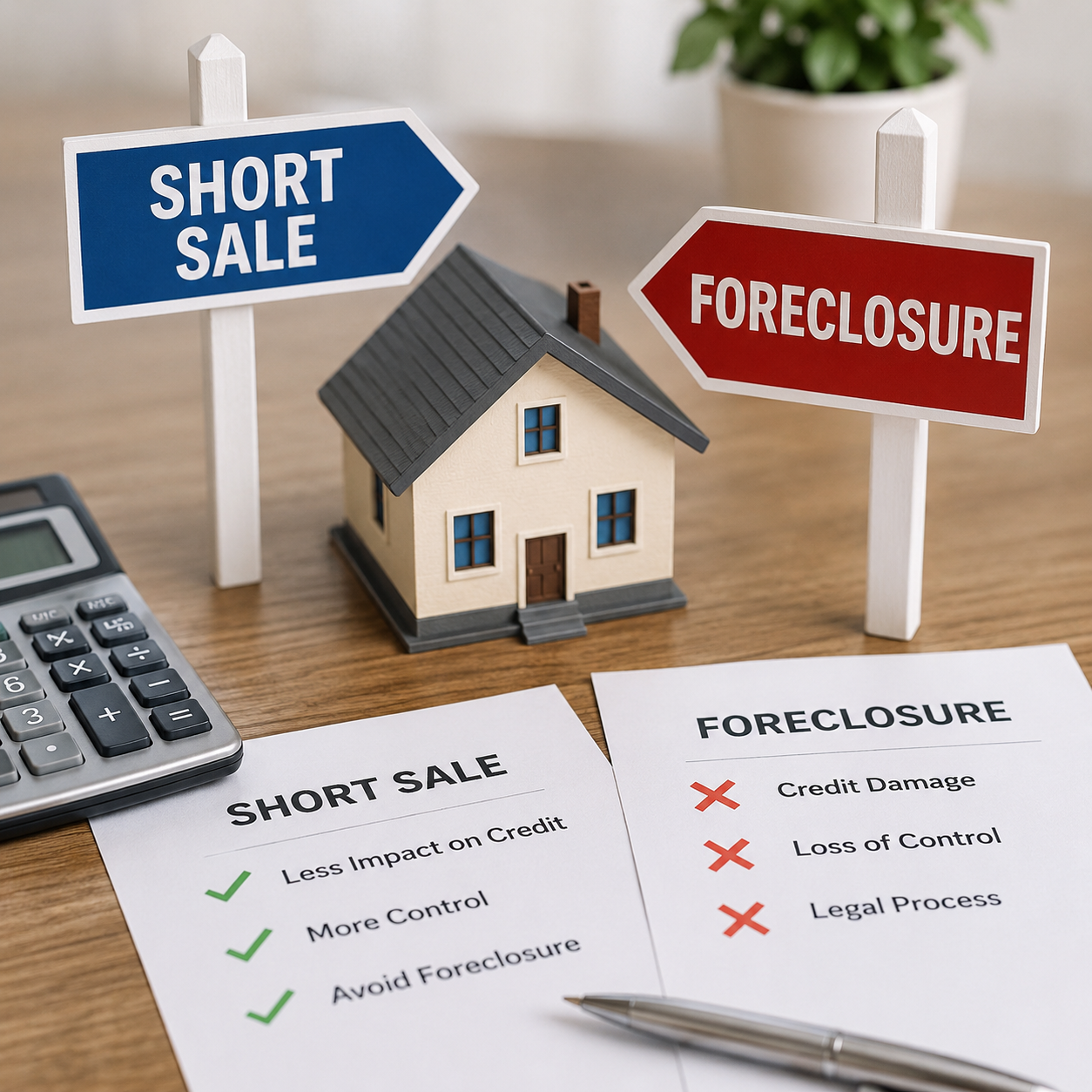
Understanding the real difference between a short sale and foreclosure can mean the difference between regaining control of your situation or feeling like decisions are being made for you.
As a Certified Short Sale Expert™ and full-time Northeast Florida real estate professional since 2013, I’ve seen how important it is for homeowners to get clear information early. In many cases, the sooner a homeowner understands their options, the more control they may have over the outcome.
Let’s break this down in plain English.
What Is Foreclosure?
Foreclosure is a legal process where the lender takes the home back because the mortgage was not paid as agreed.
Once foreclosure begins:
- The lender and local court process control the timeline
- Legal fees may start adding up
- Notices become public record
- Your options may shrink quickly
If the foreclosure completes:
- You lose your home involuntarily
- An eviction may follow
- Credit damage can be severe
- Recovery may take longer
Foreclosure is not just losing a house. It can also mean losing control of the timeline, the move, and the final outcome.
What Is a Short Sale?
A short sale is when the lender agrees to let you sell the home for less than the amount owed.
Instead of the bank taking the house, you sell it with the lender’s approval.
A short sale:
- Is voluntary, not forced
- Allows you to choose the timing
- Avoids foreclosure on your record
- Is often viewed more favorably by future lenders
- May include relocation assistance in some cases
In simple terms:
Foreclosure happens to you.
A short sale happens with you.
For a deeper explanation of lender approval, required documents, timelines, and the steps involved, read my complete guide to the short sale process in Jacksonville and Northeast Florida.
Control Is the Biggest Difference
Here’s the most important distinction many homeowners don’t realize:
With Foreclosure:
- The bank decides
- The court controls timing
- You scramble instead of choose
With a Short Sale:
- You choose to sell
- You control showings
- You have a voice in negotiations
- You can plan your move
- You avoid last-minute chaos
Control matters emotionally, financially, and practically.
I’ve spoken with homeowners who felt completely stuck because they thought foreclosure was the only path left. Once we reviewed the numbers, timeline, and potential options, they realized there may still be a way to move forward with more dignity and less pressure.
Credit Impact: Not the Same
Both options affect credit, but not equally.
Foreclosure:
- Major credit hit
- Stays on credit report longer
- Can make it harder to qualify for future loans
- Often seen as a worst-case default
Short Sale:
- Still impacts credit, but may be less severe
- Often allows for a shorter recovery period
- May be viewed as a settled obligation
- May allow a faster path to homeownership again in some situations
Many homeowners are surprised to learn they may be able to buy again sooner after a short sale than after a foreclosure, depending on the loan type, lender guidelines, and their overall financial recovery.
Timing and Stress Levels
Foreclosure is unpredictable.
- Court dates can change
- Sales may get postponed
- Notices can arrive suddenly
- Families may be forced to move quickly
Short sales are not instant, but they are planned.
With a short sale, you may be able to:
- Coordinate your move
- Line up housing
- Avoid emergency decisions
- Reduce your family’s anxiety
Stress reduction alone is one of the biggest reasons homeowners explore short sales before foreclosure is complete.
What About Owing Money After?
This is one of the biggest fears homeowners have.
With foreclosure:
- Deficiency judgments may be possible depending on the state, loan type, and situation
- You may still owe money after losing the home
With short sales:
- Many lenders may agree to forgive the remaining balance
- Some programs may prohibit collection
- Each situation is different, but negotiation may be possible
This is one of the reasons professional guidance matters. A short sale is not just about finding a buyer. It is also about understanding the lender’s process, documentation, timelines, and negotiation points.
The Myth: “I Should Just Let the Bank Take It”
Many homeowners say:
“I’ll just walk away.”
But foreclosure is rarely the clean break people imagine.
It often comes with:
- Prolonged stress
- Credit damage
- Public filings
- Loss of control
- Fewer future options
- Possible lingering debt
A short sale can give you a planned exit instead of a forced one.
The Bottom Line
If you’re struggling with your mortgage, foreclosure is not your only option.
A short sale may help you:
- Preserve more control
- Reduce damage
- Protect your timeline
- Move forward with a clearer plan
The earlier you explore your options, the more choices you may have.
Not sure whether a short sale is the right option?
Every situation depends on the property value, mortgage balance, liens, and foreclosure timeline. Visit my Jacksonville Short Sale Help Center to request a confidential, no-pressure review of your options.
Prefer to talk directly? Call or text Luis Perez Roman at 904-708-6502.

Luis Perez Roman
| Luis Perez Roman, PA | Momentum Realty
or another way