
Categories
Selling Your HomePublished September 3, 2026
What Happens to HOA Liens in a Short Sale?

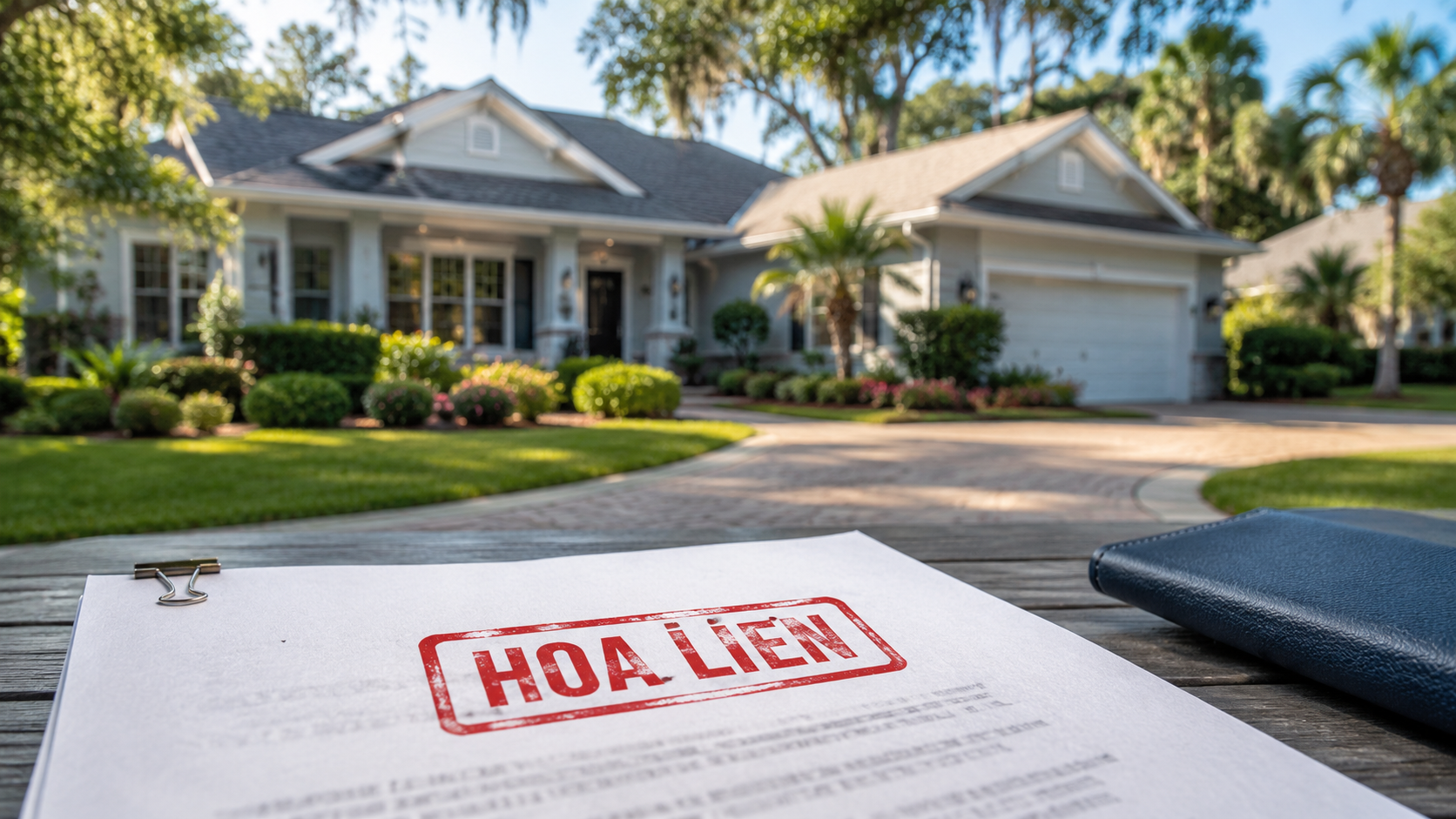
HOA liens are one of the most misunderstood — and most dangerous — issues in a short sale.
Handled correctly, they're manageable. Handled incorrectly, they can kill the deal in the final week, after a buyer, a lender, and a seller have already agreed on everything else.
Here in Duval, Clay, and St. Johns counties, a large share of the homes I work already sit inside a homeowners' or condo association — Nocatee, SilverLeaf, Oakleaf, and most of the Green Cove Springs new-construction communities, plus plenty of others across all three counties. So this isn't a rare edge case. Let's clear it up.
Why HOA Liens Matter So Much in a Short Sale
If you're behind on your mortgage, there's a very good chance you're also behind on:
- HOA dues
- Special assessments
- Late fees
- Fines
Unpaid assessments can attach to the property as a lien, separate from your mortgage. That lien has to be dealt with before a buyer can get clean, insurable title — which means it directly affects whether your short sale can close at all. That's why lenders, buyers, and title companies all pay close attention to HOA and condo association balances the moment they show up on a title search.
Do HOA Liens Have to Be Paid in a Short Sale?
Yes — an outstanding HOA or condo association lien has to be addressed before closing. That doesn't automatically mean it gets paid in full.
What actually determines the outcome:
- Florida state law governing HOA and condo association liens
- Your association's own governing documents
- Whether the lien qualifies for any priority protection under Florida's rules
- What your title company requires in order to insure clear title for the buyer
Is Florida a "Super Lien" State for HOA and Condo Liens?
You may have heard about states where a portion of HOA dues can jump ahead of the first mortgage entirely — Nevada, Colorado, Washington, and Washington, D.C. are commonly cited "super lien" states, and parts of California have a limited version of the same idea.
Florida isn't one of them. This is one of the most misunderstood points in the entire process, so it's worth getting exactly right.
Florida uses a "safe harbor" cap instead
Under Florida Statutes §720.3085 (homeowners' associations) and §718.116 (condo associations), a first mortgage lender that forecloses and takes title to a property — or accepts a deed in lieu of foreclosure — is only responsible for the lesser of:
- Twelve months of unpaid assessments, or
- One percent (1%) of the original mortgage debt
Anything owed above that capped amount is extinguished as far as the lender is concerned, though the original owner can still be personally on the hook for the rest as unsecured debt.
Why that safe harbor usually doesn't help in a short sale
Here's the part that trips people up: that safe harbor cap applies when the lender takes title through its own foreclosure or a deed in lieu. In a short sale, a third-party buyer is taking title, not the lender — which means the safe harbor generally doesn't apply, and the buyer would otherwise be exposed to the full, uncapped assessment debt if it isn't cleared before closing.
In practice, that's exactly why HOA and condo liens have to be actively negotiated and resolved as part of the short sale, rather than assumed away. This is exactly the kind of state-specific detail where your title company and a Certified Short Sale Expert™ — which is the credential I hold and use on every file — stop being optional and start being the difference between a deal that closes and one that collapses in the last week.
How HOA Lien Negotiations Usually Work in a Florida Short Sale
A typical HOA negotiation inside a short sale follows this sequence:
- The HOA or condo association provides a payoff demand.
- The first mortgage lender reviews that demand as part of approving the short sale.
- A portion of the balance may be approved for payment out of sale proceeds.
- The association agrees, in writing, to release its lien at closing.
Associations will often initially demand full arrears, legal fees, and collection costs. Negotiating that number down is common, and often necessary, to make the numbers work for everyone at the table.
Why the Title Company Drives HOA Decisions
Here's the rule that matters more than any of the above: if the title company won't insure the property without the HOA issue resolved, the deal doesn't close — full stop.
Your title company (not the agent, and not the lender) determines:
- What has to be paid
- What can realistically be reduced
- What must be formally released before closing
- What, if anything, survives closing and follows the property
Never guess on this. Always ask title directly, and get the answer in writing.
What Happens If the HOA Won't Cooperate?
This happens more often than most sellers expect. When it does, the options usually include:
- Negotiating a payment plan
- Working to reduce legal and collection fees
- Applying any lender-allowed HOA payoff caps
- Escalating through the association's attorney
- In rare cases, determining the deal isn't viable and walking away
An experienced short sale agent knows when to push, when to escalate, and — just as importantly — when a file genuinely isn't going to close no matter how hard you push. If you're weighing whether an HOA balance means your short sale is in real trouble, will I still owe money after a short sale in Florida? covers the bigger picture of what can and can't follow you after closing.
Special Assessments & Fines
Special assessments and fines are handled a little differently than routine dues:
- They may or may not be secured by a lien, depending on your association's documents
- They often still need to be resolved before closing regardless
- They can sometimes be waived or reduced through negotiation
Again — your title company makes the final call on what has to be cleared.
The Big Mistake Agents Make
The biggest mistake I see is assuming HOA issues are "minor" — something to deal with later, once the bigger pieces (lender approval, buyer financing) are locked in.
They're not minor. HOA and condo association balances are one of the top reasons short sales fall apart late in the process, often after everyone involved has already spent weeks on the file.
Final Thought
HOA liens aren't deal-killers. Not knowing how Florida actually handles them is.
When they're addressed early:
- They can be negotiated
- They can be resolved
- Deals close smoothly, on schedule
When they're ignored:
- Closings collapse
- Buyers walk away
- Sellers lose time, leverage, and options they didn't have to lose
Have an HOA Balance and Thinking About a Short Sale?
If you're behind on your mortgage and your HOA or condo dues in Duval, Clay, or St. Johns County, start with my short sale page — it walks through your options and answers the questions homeowners ask me most.
Prefer to just talk it through? Call or text me directly at 904-708-6502. No pressure, just a real answer about where you stand.

Luis Perez Roman
| Luis Perez Roman, PA | Momentum Realty
or another way